
If you’re hunting for the best recovery wearable for strength training and you’ve ever finished a heavy squat session, checked your WHOOP, and wondered why your Strain score looked like you took a light stroll — you’re not alone. Most recovery wearables were built for runners. The metrics, the algorithms, the marketing: all of it was designed around cardio athletes. If you lift, you’ve been getting a half-correct picture of your recovery for years.
I spent months wearing three different devices through deadlifts, back squats, and pull day — tracking how each one handled the specific chaos that comes with heavy strength training. If you’re trying to pick the best recovery wearable for strength training, here’s what actually matters: not battery life, not which one looks better on your wrist, but whether the device actually understands what lifting does to your body.
Why Most Recovery Wearables Fail Lifters
Here’s the core problem when choosing a recovery wearable for strength training: traditional wearables measure cardiovascular output to estimate effort. Heart rate goes up, strain goes up. Simple, effective — for running. During a heavy set of deadlifts, though? Your heart rate spikes briefly and drops back down fast. Meanwhile your muscles, tendons, and nervous system just took a serious hit.
That mismatch is why choosing the right recovery wearable for strength training matters — your device logs a “light workout” while your body is begging for 48 hours of recovery. You push through the next day, wonder why you feel flat, and blame sleep or nutrition instead of the fact that your wearable missed the actual load. The best devices for strength athletes are the ones that have started solving this problem — either through accelerometer-based musculoskeletal (MSK) load tracking, smarter HRV analysis, or workout-specific algorithms. Here’s how the three top contenders stack up.
WHOOP 5.0: Finally Getting Strength Training Right
WHOOP has led the recovery wearable for strength training category for years, and the 5.0 is where it finally started making sense for lifters specifically. The big update: Passive MSK load tracking. WHOOP now uses the accelerometer to estimate the musculoskeletal stress of strength workouts — not just heart rate. A heavy deadlift session registers differently than a run with the same average heart rate. That’s the first wearable to do this in a meaningful way, and it actually changes how useful the Recovery score is the morning after leg day.
WHOOP’s Strain + Recovery system is what makes it stand out as a recovery wearable for strength training, and for lifters it’s the most actionable. You get a Strain score after every session and a Recovery score each morning (0–100 based on HRV, resting heart rate, and sleep). When the data feeds correctly — and the MSK update helps significantly — you’ll stop wondering why the device is telling you to train hard on a day your legs feel wrecked.

WHOOP One Bundle – WHOOP 5.0 Health & Fitness Wearable with 12-Month Membership + CoreKnit Wristband + Corded Battery Pack – 24/7 Activity Tracker with Sleep, Recovery & VO2 Max Insights – Ash Grey
- ALL-IN-ONE PERFORMANCE PACKAGE: This bundle includes the WHOOP 5.0 wearable, 12-month WHOOP One membership, a premium CoreKnit Wristband in Ash Grey, and a corded Basic Charger-everything you need to start tracking your health and performance 24/7.
- ADVANCED HEALTH TRACKING: Gain lab-level accuracy on key metrics like heart rate, VO2 max, HRV, sleep, recovery, and menstrual cycle insights. WHOOP gives you real-time, personalized feedback to optimize your habits and training.
- NEXT-LEVEL COMFORT & STYLE: The included CoreKnit Wristband is ultra-lightweight, fully adjustable, and built for all-day wear-ideal for workouts, sleep, and everyday activities. Fast Link tech lets you switch bands effortlessly to match your look.
- PERSONALIZED AI COACHING: With WHOOP Coach, get tailored recommendations for sleep, strain, and recovery. Use the WHOOP Journal to log 160+ daily behaviors and discover how your habits impact your health over time.
- EXTENDED BATTERY LIFE: Stay powered for 14+ days with the fast-charging Basic Charger. WHOOP is designed to go the distance-so you can track continuously without interruption.
Oura Ring 4: The Passive Recovery Tracker Lifters Sleep On
The Oura Ring 4 takes a completely different approach as a recovery wearable for strength training — and honestly, for a subset of lifters, it might be the smarter pick. Instead of being a coach that tracks everything and grades your effort, Oura is a passive health monitor. It’s measuring your body’s readiness before you train, which is a different but equally valuable question. The Readiness Score (0–100) pulls from HRV, body temperature, resting heart rate, and sleep quality to tell you whether today’s the day to push or pull back.
Where Oura shines for strength athletes is in the recovery recovery side — meaning it’s excellent at detecting when you’re run-down, over-reached, or fighting off illness before it tanks your session. The ring form factor is worth mentioning here too: it doesn’t get in the way during lifting. No bulk on your wrist during a bench press, no strap slipping during Romanian deadlifts. You wear it 24/7 without noticing it, which means the sleep and recovery data is more consistent than with a wrist device you might take off.
The limitation is the other direction: Oura doesn’t track strength training during the workout well. It can log that you moved, but it won’t give you the granular strain analysis you get from WHOOP or the rep tracking you’d get from a Garmin. If your main goal is optimizing during training, Oura isn’t the tool. If your main goal is optimizing between sessions, it’s excellent.
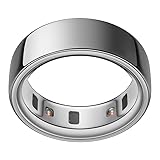
Oura Ring 4 – Silver – Size 8 – Sleep, Activity, Women’s Health, AI Advisor, Up to 8 Days of Battery Life, Size Before You Buy, Android & iOS Compatible Metallic Silver 8
- ACCURACY – SMART SENSING – Oura tracks over 50 health metrics, including sleep, activity, stress, heart health, and women’s health metrics. Oura Ring 4 is powered by Smart Sensing, which adapts to you — delivering accurate, continuous data, day and night
- ACCURATE SIZING ESSENTIAL – Oura Ring 4 uses unique sizing different from standard jewelry rings; use the Oura Ring 4 Sizing Kit to find your perfect fit before purchasing
- LONG LASTING BATTERY – With up to 8 days of battery life, no screens and no vibrations, Oura Ring 4 allows you to focus on the present. From a workout to a night out — you’re free to forget it’s on. Until you start getting compliments
- OURA MEMBERSHIP – First month of membership is included with purchase, for new members only. Subscription is 5.99/mo afterwards. Membership is tied to your account via the Oura App, not your physical ring
- HSA/FSA ELIGIBLE – We can accept HSA or FSA funds for the following: Oura Ring, additional chargers, and shipping
$349.00

Garmin Forerunner 965: The All-Rounder That Doesn’t Specialize
The Garmin Forerunner 965 is the wildcard in this comparison. It’s not a dedicated recovery tracker — it’s a full GPS running watch with recovery features bolted on. For hybrid athletes (people who lift and run, or do CrossFit, or train for obstacle races), it actually makes a strong case. You get HRV Status, Body Battery, Training Readiness, and suggested daily workouts all in one device that also tracks your 5K PR.
The honest truth for pure strength athletes: Garmin’s recovery metrics still skew cardio. The Training Readiness score and HRV Status are solid, but they’re built around aerobic training loads. A heavy powerlifting week might register as “easy” simply because your heart rate never sustained elevation long enough to move the needle. Reddit threads are full of lifters noting that Garmin’s Body Battery is “basically 100% every day” even on days they feel smashed. It’s not useless — the HRV trending data has real value — but it’s the weakest of the three specifically for strength-focused athletes.
Sale

Garmin Forerunner® 965 Running Smartwatch, Colorful AMOLED Display, Training Metrics and Recovery Insights, Black and Powder Gray, 010-02809-00
- Brilliant AMOLED touchscreen display with traditional button controls and lightweight titanium bezel
- Battery life: up to 23 days of battery life in smartwatch mode, up to 31 hours in GPS mode
- Confidently run any route using full-color, built-in maps and multi-band GPS
- Training readiness score is based on sleep quality, recovery, training load and HRV status to determine if you’re primed to go hard and reap the rewards (data presented is intended to be a close estimation of metrics tracked)
- Plan race strategy with personalized daily suggested workouts based on the race and course that you input into the Garmin Connect app and then view the race widget on your watch; daily suggested workouts adapt after every run to match performance and recovery
$499.99
So Which One Should You Actually Buy?
Here’s the honest breakdown for strength-focused athletes:
- You train for performance and want the most actionable data → WHOOP 5.0. The MSK load tracking is a genuine game-changer for lifters who’ve been burned by inaccurate strain scores. The subscription stings, but if you’re serious about optimizing your recovery, nothing else reads lifting the way it does.
- You care most about sleep and between-session recovery → Oura Ring 4. If you want to know whether your body is ready to train hard today, Oura gives you a reliable answer — and you’ll barely notice you’re wearing it. Ideal for lifters who want passive monitoring without the coaching.
- You’re a hybrid athlete who also runs or cycles → Garmin Forerunner 965. One device, no subscription, handles everything. Just don’t expect it to fully understand what a max effort squat day costs you.
There isn’t one perfect answer for every lifter — it depends on what question you’re trying to answer. But if you’re only lifting and you want the best recovery wearable for strength training? WHOOP 5.0 is the one. The subscription is annoying but the data is finally honest about what heavy lifting does to your body.
The Takeaway
Runners have had wearables that understood them for years. Lifters are finally getting the same treatment. Whether you go WHOOP for performance coaching, Oura for passive recovery monitoring, or Garmin for all-around hybrid tracking — the key is picking the device that answers the question you’re actually asking. Stop guessing whether you’re recovered. Let the data tell you.
Which one are you running with (or lifting with)? Drop your setup in the comments — I’m especially curious whether anyone’s tried wearing both WHOOP and Oura simultaneously. The data nerd in me wants to know if they ever disagree.